15-Minute Evening Wind-Down Workout for Better Sleep
Sleep better with this 15-minute evening wind-down routine. Gentle stretches and breathing exercises designed to prepare your body for deep, restful sleep.


15-Minute Evening Wind-Down Workout for Better Sleep
The right evening workout can help you fall asleep faster and sleep deeper. Gentle movement before bed reduces stress hormones, releases muscle tension, and signals to your body that it is time to rest. This 15-minute routine combines light stretching, mobility work, and relaxation — all designed to prepare your body for quality sleep. According to the CDC, adults need 7-9 hours of sleep per night, and regular physical activity improves sleep quality significantly.
You can do this entire routine on the floor beside your bed — no equipment, no jumping, no elevated heart rate.
Why Evening Exercise Helps You Sleep
- Reduces cortisol levels — gentle movement lowers the stress hormone that keeps you awake
- Releases muscle tension stretching eases tightness accumulated during the day
- Activates parasympathetic nervous system — your “rest and digest” mode
- Improves sleep onset — studies show 30 minutes of moderate exercise reduces time to fall asleep by up to 50% (NIH, 2013)
- Regulates body temperature — post-exercise cooling promotes deeper sleep cycles
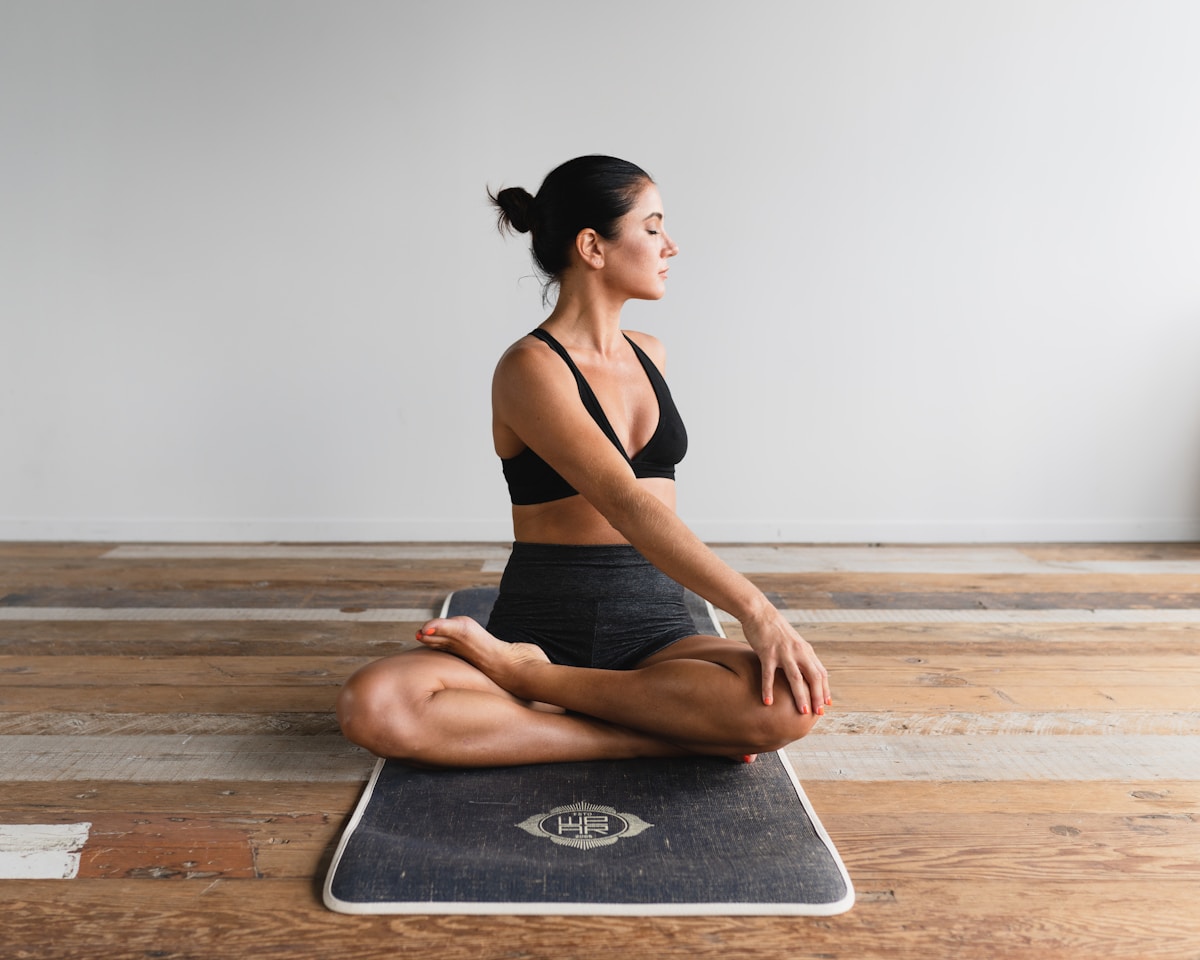
The 15-Minute Wind-Down Routine
Perform each exercise slowly and deliberately. Focus on deep, steady breathing throughout. This is not a workout — it is a transition from your busy day to restful sleep.
1. Diaphragmatic Breathing (2 Minutes)
Start by lying on your back with knees bent and feet flat. Place one hand on your chest and one on your belly.
- Inhale through your nose for 4 counts — your belly hand should rise, your chest hand should stay relatively still
- Exhale through your mouth for 6 counts — feel your belly fall
- Repeat for 2 minutes (approximately 12-15 breath cycles)
This activates the parasympathetic nervous system, lowering heart rate and blood pressure.
2. Supine Spinal Twist (1 Minute Per Side)
Lie on your back with arms extended to the sides in a T position.
- Bend your right knee and guide it across your body to the left with your left hand
- Keep both shoulders pressed into the floor
- Turn your head to the right for a deeper twist
- Hold for 30 seconds, breathing deeply
- Switch sides
This releases tension in the lower back, hips, and thoracic spine — areas that tighten from sitting all day.
3. Figure-Four Stretch (1 Minute Per Side)
Lie on your back with knees bent and feet flat.
- Cross your right ankle over your left knee
- Reach through and pull your left thigh toward your chest
- Hold when you feel a stretch in your right hip and glute
- Breathe deeply for 30 seconds
- Switch sides
This opens the hip flexors and glutes — muscles that shorten from hours of sitting.
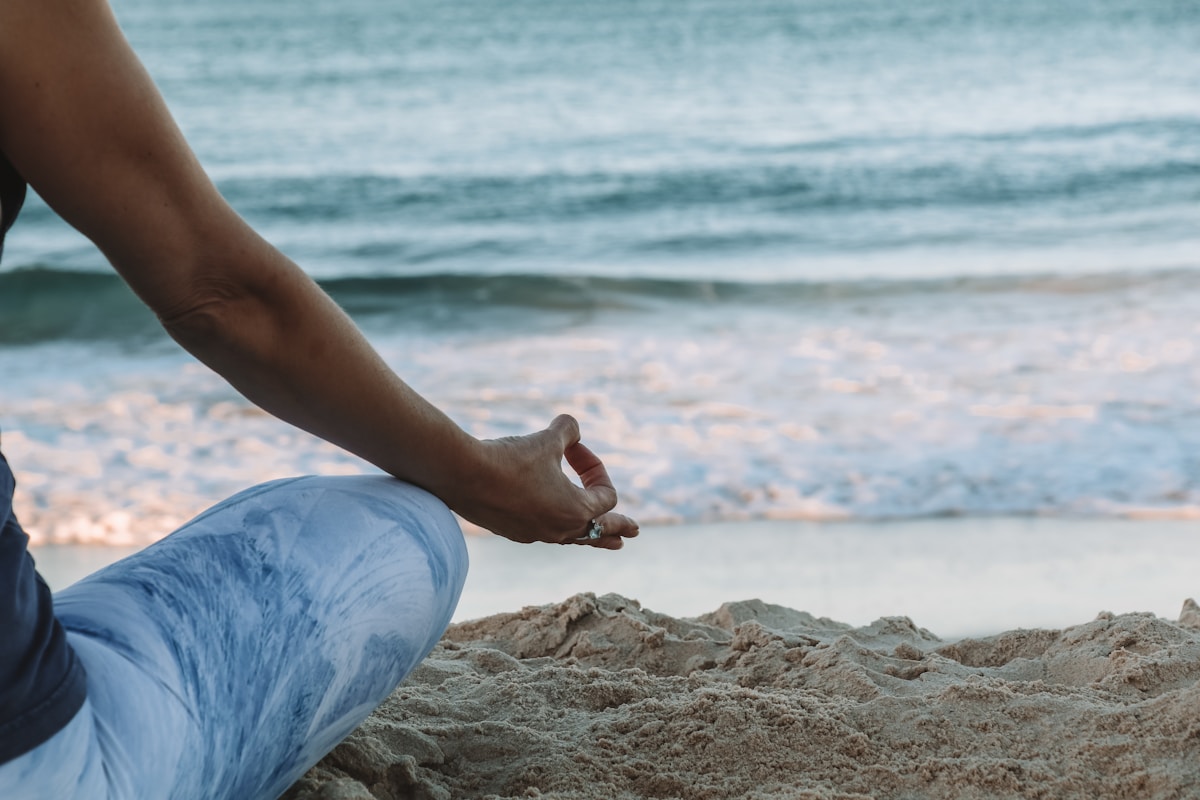
4. Seated Forward Fold (2 Minutes)
Sit on the floor with legs extended straight in front of you.
- Inhale and lengthen your spine upward
- Exhale and fold forward from your hips, reaching toward your toes
- Keep your back as straight as possible — round only as far as comfortable
- Hold for 1-2 minutes, breathing slowly
Do not force the stretch. Let gravity do the work. The goal is relaxation, not flexibility.
5. Child’s Pose (2 Minutes)
Kneel on the floor with knees wide and toes touching.
- Sit your hips back toward your heels
- Walk your hands forward, lowering your chest toward the floor
- Rest your forehead on the ground
- Breathe deeply into your back, feeling your ribs expand
- Hold for 2 minutes
This calms the nervous system, gently stretches the hips, and promotes a meditative state.
6. Legs Up the Wall (3 Minutes)
Sit sideways next to a wall, then swing your legs up the wall as you lie back.
- Scoot your hips as close to the wall as comfortable
- Let your arms rest at your sides, palms facing up
- Close your eyes and breathe naturally
- Hold for 3 minutes
This inversion reverses blood flow, reduces leg swelling, and deeply calms the nervous system. It is one of the most effective pre-sleep positions in yoga therapy.
Quick Reference: The Routine
| # | Exercise | Duration | Target |
|---|---|---|---|
| 1 | Diaphragmatic Breathing | 2 min | Nervous system |
| 2 | Supine Spinal Twist | 2 min | Spine, back |
| 3 | Figure-Four Stretch | 2 min | Hips, glutes |
| 4 | Seated Forward Fold | 2 min | Hamstrings, back |
| 5 | Child’s Pose | 2 min | Hips, back, calm |
| 6 | Legs Up the Wall | 3 min | Legs, circulation |
When to Do This Routine
- Ideal time: 30-60 minutes before your target bedtime
- Avoid: Within 1 hour of intense exercise — your body needs time to cool down
- Consistency: Do it every night for at least 2 weeks to establish a sleep ritual
- Pair with: Dimming lights, avoiding screens, and keeping the room cool (65-68 degrees)
“Sleep is not a luxury — it is a biological necessity. Treat your bedtime routine with the same importance as your morning routine.”
Additional Sleep Hygiene Tips
- Consistent schedule: Go to bed and wake up at the same time every day, even on weekends
- Cool room: 65-68 degrees Fahrenheit is optimal for sleep
- No screens: Blue light suppresses melatonin production for up to 90 minutes
- Limit caffeine: No coffee or tea after 2 PM (caffeine half-life is 5-6 hours)
- Dark room: Use blackout curtains or an eye mask
Frequently Asked Questions
Key Takeaways
- 15 minutes of gentle stretching before bed improves sleep quality
- Focus on breathing, spinal mobility, hip opening, and relaxation
- Do this routine 30-60 minutes before your target bedtime
- Pair with cool room temperature, no screens, and consistent schedule
- Results improve with consistency — stick with it for 2+ weeks
Try tonight: Set a 15-minute timer on our free workout timer, do this routine, and notice the difference in your sleep quality.
Related: 2-Minute Morning Habit | Evening Routine for Better Sleep
RBTF Tip 1.2m × 1.2m is enough. Start with 5 minutes, keep the streak, and let small wins compound.

Your RBTF Coach
Rebyte.Talk · RBTF Coach
Helping beginners build 5-min habits in small spaces. No gym, no expensive gear — just consistent small wins.
More guides