How to Do a Perfect Push-Up (Beginner Guide with 3 Regressions)
Learn proper push-up form with this beginner guide. 3 regressions from wall push-ups to standard — progress from zero to 12 reps in 5-9…

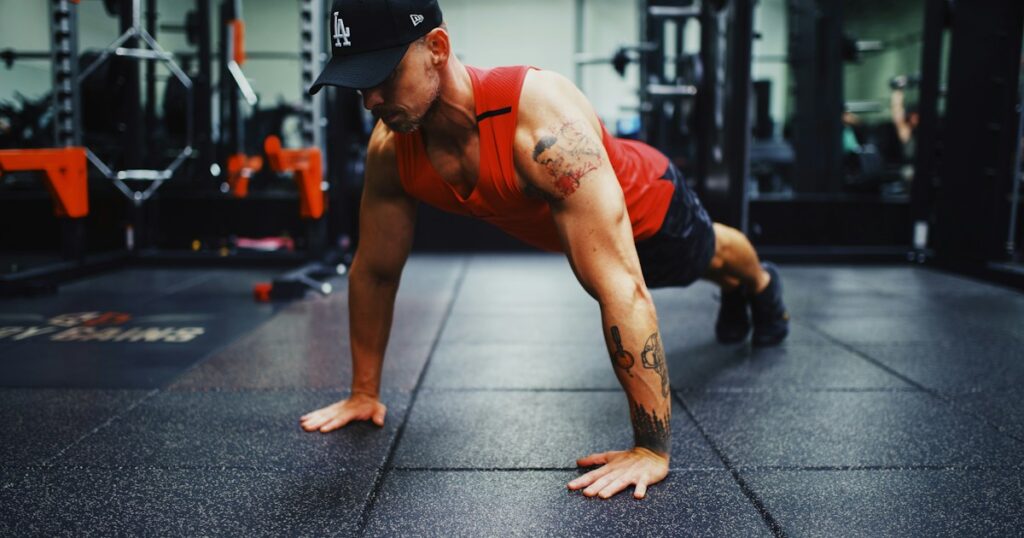
How to Do a Perfect Push-Up (Beginner Guide with 3 Regressions)
The push-up is the most effective bodyweight exercise for building upper body strength. It works your chest, shoulders, triceps, and core in one movement. Yet most beginners either do them with bad form or give up because they cannot do a single rep. This guide breaks down the perfect push-up into simple steps and gives you three easier variations to build strength progressively. According to the WHO, muscle-strengthening exercises like push-ups should be performed at least twice per week for optimal health.
You do not need a gym, equipment, or even floor space — every variation can be done at home in under 5 minutes.
Why the Push-Up Matters
- Works multiple muscle groups — chest, shoulders, triceps, core, and even legs
- Builds functional strength — the pushing pattern used in daily life
- No equipment required — train anywhere, anytime
- Scales from beginner to advanced — wall push-ups to one-arm push-ups
- Improves posture — strengthens the muscles that hold your shoulders back
The Perfect Push-Up: Step-by-Step
Form Checklist — Use This Every Rep
- Hand placement: Slightly wider than shoulder-width, fingers spread
- Arm position: Elbows bend at 45 degrees from your body — not flared out to 90 degrees
- Body line: Straight from head to heels — no sagging hips or piked butt
- Core engagement: Brace your abs as if someone is about to punch your stomach
- Head position: Neutral spine — look at the floor about 30cm ahead of your hands
- Range of motion: Lower until your chest nearly touches the floor, push to full arm extension
- Breathing: Inhale on the way down, exhale as you push up
Common mistakes to avoid:
- Flaring elbows to 90 degrees — puts excessive stress on shoulder joints. Keep them at 45 degrees.
- Sagging hips — means your core is not engaged. Think “rigid plank.”
- Piking your butt upward — reduces chest engagement. Keep your body straight.
- Half reps — only going halfway down. Full range of motion builds real strength.
- Holding your breath — exhale on the push, inhale on the lower.
3 Push-Up Regressions (Start Here If You Cannot Do One)
If you cannot do a standard push-up yet, that is completely normal. These three progressions build the strength you need, starting from the easiest and progressing to harder.
Regression 1: Wall Push-Up
Difficulty: Very Easy — anyone can do this
Muscles worked: Chest, shoulders, triceps (reduced load)
How to do it:
- Stand 1 meter from a wall, facing it
- Place your hands on the wall at chest height, slightly wider than shoulder-width
- Keep your body straight from head to heels
- Bend your elbows to bring your chest toward the wall
- Push back to the starting position
Why it works: The wall angle reduces the amount of body weight you are pushing, making it accessible for absolute beginners. You still learn the correct pushing pattern.
Target: 3 sets of 12-15 reps before progressing to Level 2.
Regression 2: Incline Push-Up
Difficulty: Moderate — requires basic upper body strength
Muscles worked: Chest, shoulders, triceps, core (moderate load)
How to do it:
- Place your hands on a sturdy elevated surface — a countertop, table, or chair
- Walk your feet back until your body is at an angle (roughly 45 degrees)
- Lower your chest toward the surface, keeping your body straight
- Push back up to full arm extension
Why it works: The higher the surface, the easier the exercise. As you get stronger, use progressively lower surfaces (countertop → chair → step → floor).
Target: 3 sets of 10-12 reps before progressing to Level 3.
Regression 3: Knee Push-Up
Difficulty: Challenging — close to a standard push-up
Muscles worked: Chest, shoulders, triceps, core (near-full load)
How to do it:
- Start on all fours, then walk your hands forward until your body forms a straight line from knees to head
- Lower your chest toward the floor, keeping elbows at 45 degrees
- Push back up to full arm extension
- Keep your core engaged — do not let your hips sag
Why it works: Kneeling reduces the lever length, decreasing the load by roughly 25-30%. This bridges the gap between incline push-ups and the full version.
Target: 3 sets of 10-12 reps, then attempt standard push-ups.
Progression Timeline
| Level | Variation | Target Reps | Sets | Time to Progress |
|---|---|---|---|---|
| 1 | Wall Push-Up | 12-15 | 3 | 1-2 weeks |
| 2 | Incline Push-Up | 10-12 | 3 | 2-3 weeks |
| 3 | Knee Push-Up | 10-12 | 3 | 2-4 weeks |
| 4 | Standard Push-Up | 8-12 | 3 | Ongoing |
Total timeline from wall push-up to standard push-up: approximately 5-9 weeks with consistent training (3 sessions per week).
How to Add Push-Ups to Your Routine
- Beginner: 3 sets of your current regression, 3 times per week
- Intermediate: 3 sets of standard push-ups, 4 times per week
- Advanced: Add variations — decline push-ups, diamond push-ups, archer push-ups
Pair push-ups with a full-body bodyweight routine for balanced training, or use our free workout timer to structure 40-second work intervals.
“Every expert started as a beginner who refused to give up. The wall push-up you do today becomes the one-arm push-up of your future.”
Frequently Asked Questions
Key Takeaways
- The perfect push-up requires a straight body line, 45-degree elbow angle, and full range of motion
- Three regressions: wall push-up → incline push-up → knee push-up
- Progression timeline: 5-9 weeks from wall to standard with consistent training
- Train 3 times per week with rest days between sessions
- Quality reps beat quantity — always prioritize form
Ready to start? Try the wall push-up today — 3 sets of 12 reps. Use our free workout timer to pace your sets.
Pair with: 7-Day Beginner Workout Plan | Full-Body Bodyweight Exercises
RBTF Tip 1.2m × 1.2m is enough. Start with 5 minutes, keep the streak, and let small wins compound.

Your RBTF Coach
Rebyte.Talk · RBTF Coach
Helping beginners build 5-min habits in small spaces. No gym, no expensive gear — just consistent small wins.
More guides