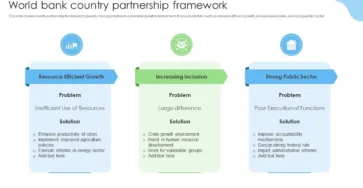
The Country Partnership Framework (CPF) is a pivotal initiative launched by the World Bank aimed at fostering economic stability in Pakistan. This landmark $20 billion collaboration, developed over a decade of strategic partnership, seeks to enhance employment opportunities and promote digital transformation across various sectors. With a focus on climate resilience, the CPF addresses urgent developmental challenges while laying the groundwork for sustainable growth. Prime Minister Shehbaz Sharif emphasized the importance of this framework in boosting job creation and implementing IT-led initiatives that can revolutionize the economy. As Pakistan embarks on this transformative journey, the CPF promises to align resources effectively, ensuring that investments are directed where they are needed most for the nation’s prosperity.
The Country Partnership Framework, often referred to as the CPF, represents a strategic alliance between Pakistan and the World Bank, aimed at addressing the economic and social challenges faced by the nation. This comprehensive initiative is not just about financial support; it embodies a commitment to fostering economic resilience, enhancing employment prospects, and driving digital advancements. By prioritizing climate adaptation and sustainable practices, this framework seeks to create a robust infrastructure that supports long-term growth. The collaboration emphasizes the need for coordinated efforts among various stakeholders to ensure that the benefits of such initiatives reach the most vulnerable populations. Through this partnership, Pakistan is poised to navigate its developmental hurdles while setting a course for a brighter economic future.
Understanding the Country Partnership Framework (CPF)
The Country Partnership Framework (CPF) represents a major commitment by the World Bank to support Pakistan’s development over the next decade. With a staggering investment of $20 billion, this framework is designed to address critical issues that affect the nation, including economic stability and the enhancement of employment opportunities. The CPF is a product of extensive discussions and collaboration between the World Bank and the Pakistani government, reflecting a shared vision for a prosperous future. By focusing on strategic priorities such as digital transformation and climate resilience, the CPF aims to create sustainable solutions that will benefit both current and future generations.
In addition to its financial backing, the CPF emphasizes the importance of long-term partnerships and collaboration among various stakeholders, including government officials, private sector investors, and civil society. This multi-faceted approach ensures that the initiatives under the CPF are well-rounded and effectively implemented. The framework not only seeks to enhance economic stability in Pakistan but also aims to elevate the standard of living through targeted social protection projects, which are especially vital for the country’s most vulnerable populations.
Impact of World Bank Pakistan Initiative on Economic Stability
The World Bank Pakistan Initiative has been pivotal in steering the nation towards enhanced economic stability. Through strategic investments and targeted reforms, the CPF is set to tackle Pakistan’s pressing economic challenges, such as high unemployment rates and insufficient infrastructural development. By focusing on employment opportunities and fostering an environment conducive to growth, the CPF aims to unlock the potential of the Pakistani workforce, particularly in sectors that leverage technology and innovation.
Moreover, the initiative highlights the significance of climate resilience in promoting economic stability. By integrating climate-smart practices into development strategies, the World Bank aims to prepare Pakistan for the impacts of climate change, ensuring that economic growth does not come at the expense of environmental sustainability. This dual focus on economic and environmental health is essential for achieving long-term stability and resilience in Pakistan’s economy.
Digital Transformation in Pakistan: A Key to Progress
Digital transformation is a cornerstone of the CPF and is considered essential for modernizing Pakistan’s economy. As highlighted by Prime Minister Shehbaz Sharif, advancements in digital initiatives, such as the digitization of the Federal Board of Revenue, are crucial for increasing efficiency and transparency in government operations. These initiatives not only aim to reduce corruption but also enhance revenue collection, which is vital for funding development projects across various sectors.
Furthermore, the World Bank’s emphasis on digital solutions aligns with the broader goals of improving educational outcomes and fostering innovation. By investing in digital infrastructure and promoting tech-led initiatives, the CPF seeks to equip the younger generation with the skills necessary for a competitive workforce. This focus on digital transformation is expected to create new employment opportunities and pave the way for sustainable economic growth in Pakistan.
Enhancing Climate Resilience through Strategic Initiatives
Climate resilience is a critical component of the Country Partnership Framework, as Pakistan faces significant environmental challenges, including extreme weather events and resource scarcity. The World Bank’s commitment to enhancing climate resilience involves investing in projects that promote sustainable agriculture, water management, and disaster preparedness. By addressing these issues, the CPF aims to safeguard vulnerable communities and ensure food security, which are essential for the nation’s overall stability.
In addition to immediate interventions, the CPF emphasizes the importance of long-term strategies that integrate climate considerations into all aspects of development planning. This holistic approach not only mitigates the impacts of climate change but also helps to build a more resilient economy capable of withstanding future shocks. By aligning development goals with environmental sustainability, Pakistan can enhance its capacity to adapt to changing climate conditions while promoting economic growth.
Boosting Employment Opportunities through CPF Initiatives
One of the primary objectives of the Country Partnership Framework is to boost employment opportunities across Pakistan. As the nation grapples with high unemployment rates, particularly among the youth, the CPF aims to create pathways for job creation through targeted investments in sectors such as technology, infrastructure, and renewable energy. By fostering a conducive environment for private sector growth and innovation, the CPF seeks to empower individuals and communities, ultimately leading to improved livelihoods.
Additionally, the World Bank’s focus on enhancing skills training and vocational education is crucial for aligning the workforce with market demands. By equipping individuals with the necessary skills and knowledge, these initiatives will not only reduce unemployment but also contribute to a more dynamic and competitive economy. The CPF’s commitment to improving employment opportunities serves as a foundation for sustainable development and economic empowerment in Pakistan.
Public-Private Partnerships: A Pathway to Sustainable Growth
The CPF recognizes the vital role of public-private partnerships (PPPs) in achieving sustainable growth in Pakistan. By leveraging the strengths of both the public and private sectors, the framework aims to address critical infrastructure needs and drive innovation in key areas such as energy, transportation, and technology. These partnerships are essential for mobilizing resources, sharing risks, and enhancing the efficiency of development projects.
Moreover, PPPs can facilitate knowledge transfer and capacity building, which are crucial for fostering a culture of entrepreneurship and innovation. As the World Bank collaborates with private sector stakeholders, it is expected that new investment opportunities will emerge, contributing to economic diversification and resilience. Through this collaborative approach, the CPF aims to create a robust foundation for sustainable development in Pakistan.
World Bank’s Commitment to Transform Pakistan’s Healthcare Sector
The World Bank is poised to significantly impact Pakistan’s healthcare sector through the initiatives outlined in the CPF. With a focus on improving health outcomes and addressing the challenges of child stunting and maternal health, the World Bank aims to invest in programs that provide quality health and nutrition services to millions of people. By prioritizing healthcare access, the CPF seeks to enhance the overall well-being of the population, particularly in underserved areas.
In addition to addressing immediate health concerns, the CPF emphasizes the importance of long-term health system strengthening. This includes not only improving service delivery but also enhancing the capacity of healthcare providers and institutions. By investing in the healthcare workforce and infrastructure, the CPF aims to create a more resilient health system capable of responding to current and future challenges, ultimately contributing to the nation’s socio-economic development.
Educational Reforms: A Cornerstone of Economic Development
Education is a fundamental pillar of the CPF, as improving educational outcomes is crucial for driving economic development in Pakistan. With millions of children out of school, particularly girls, the World Bank’s initiatives aim to enhance access to quality education and reduce learning poverty. By investing in educational infrastructure and resources, the CPF seeks to ensure that all children have the opportunity to learn and thrive.
Furthermore, the CPF emphasizes the importance of aligning educational programs with market needs, preparing students for the jobs of the future. By fostering innovation and critical thinking, the framework aims to cultivate a skilled workforce that can contribute to economic growth and resilience. Educational reforms under the CPF are vital not only for individual empowerment but also for building a prosperous and sustainable economy in Pakistan.
Aligning Development Goals with International Standards
The CPF is strategically designed to align Pakistan’s development goals with international standards and best practices. By incorporating global benchmarks and frameworks, such as the Sustainable Development Goals (SDGs), the World Bank aims to ensure that its initiatives are not only relevant to Pakistan’s context but also contribute to broader global objectives. This alignment is essential for attracting international support and investment, which are crucial for the success of the CPF.
Moreover, by embracing international standards, the CPF seeks to enhance transparency and accountability in the implementation of development projects. This focus on governance and integrity is vital for building trust among stakeholders and ensuring that resources are utilized effectively. By aligning its development strategies with global norms, Pakistan can enhance its credibility on the international stage and foster collaboration with global partners.
Frequently Asked Questions
What is the Country Partnership Framework (CPF) of the World Bank for Pakistan?
The Country Partnership Framework (CPF) is a strategic initiative developed by the World Bank in collaboration with Pakistan, aimed at addressing critical economic challenges and enhancing development over a 10-year period. It focuses on improving employment opportunities, digital transformation, and climate resilience, ensuring economic stability in Pakistan.
How does the CPF contribute to economic stability in Pakistan?
The CPF contributes to economic stability in Pakistan by providing structured financial support, amounting to $20 billion, to implement projects that enhance infrastructure, promote job creation, and foster climate resilience. This strategic framework aims to tackle urgent developmental challenges and support sustainable growth.
What are the key areas of focus in the World Bank’s CPF for Pakistan?
The key areas of focus in the World Bank’s CPF for Pakistan include improving employment opportunities, advancing digital transformation, enhancing climate resilience, and supporting social protection projects for vulnerable populations. These initiatives are designed to promote sustainable economic development.
How is digital transformation integrated into the CPF for Pakistan?
Digital transformation is a crucial component of the CPF for Pakistan, as it enables efficient governance and service delivery. Initiatives such as the digitization of the Federal Board of Revenue (FBR) and pilot projects at Karachi Port are examples of how the CPF aims to leverage technology to enhance public services and combat corruption.
What role does climate resilience play in the Country Partnership Framework for Pakistan?
Climate resilience plays a vital role in the CPF as it addresses the impacts of climate change on Pakistan’s economy and communities. The framework includes projects aimed at enhancing infrastructure and promoting sustainable practices that will help mitigate climate-related risks and support long-term economic stability.
How does the CPF aim to improve employment opportunities in Pakistan?
The CPF aims to improve employment opportunities in Pakistan by funding projects that stimulate economic growth, enhance skills development, and create job opportunities, particularly in sectors such as IT and renewable energy. This strategic approach seeks to address high unemployment rates and foster a more inclusive economy.
What is the significance of the $20 billion funding commitment under the CPF?
The $20 billion funding commitment under the CPF signifies a long-term partnership between the World Bank and Pakistan, aimed at addressing pressing economic and developmental challenges. This historic investment is expected to catalyze reforms and projects that will enhance social and economic welfare across the country.
How will the CPF impact education and health services in Pakistan?
The CPF is set to significantly impact education and health services in Pakistan by aiming to provide quality education for 12 million children and improve health, nutrition, and population services for 50 million people. This commitment addresses critical issues such as child stunting and school dropouts, particularly among girls.
What are the expected outcomes of the CPF by 2035?
By 2035, the CPF expects to achieve substantial improvements in Pakistan, including nutrition security for 30 million people, increased climate resilience for 75 million individuals, and improved educational outcomes for millions of children, thereby laying a foundation for sustainable economic growth.
How does the CPF encourage private sector investment in Pakistan?
The CPF encourages private sector investment in Pakistan by identifying and addressing barriers to investment, fostering public-private partnerships, and aligning with international development partners. This collaborative approach aims to create a conducive environment for private sector engagement in various economic sectors.
| Key Points |
|---|
| Launch of the $20 billion Country Partnership Framework (CPF) by the World Bank to enhance employment, IT initiatives, and climate resilience. |
| CPF aims to address Pakistan’s economic and developmental challenges over a decade of strategic cooperation. |
| Prime Minister Shehbaz Sharif emphasized the importance of CPF, highlighting its role in social protection projects. |
| Initiatives include digitization of the Federal Board of Revenue (FBR) and pilot projects to enhance revenue and reduce corruption. |
| World Bank commits to supporting health, nutrition, and education for millions of Pakistanis over the next decade. |
| The CPF focuses on public-private partnerships and sustainable growth, requiring collaboration among stakeholders. |
| The World Bank will adapt strategies as the CPF evolves, aiming to fulfill long-term sustainable development goals. |
Summary
The Country Partnership Framework (CPF) is a pivotal initiative aimed at addressing Pakistan’s pressing economic and developmental challenges. Launched with a $20 billion commitment from the World Bank, the CPF represents a transformative ten-year collaboration focused on enhancing employment, fostering IT-led initiatives, and building climate resilience. This strategic partnership not only seeks to improve the living conditions of vulnerable populations through social protection projects but also emphasizes the importance of digital transformation and public-private partnerships in driving sustainable growth. As the CPF evolves, it is essential for all stakeholders to unite in their efforts, ensuring the success of this landmark initiative and the long-term prosperity of Pakistan.